PACKINT - Chocolate Machines

Why Choose a Chocolate Coin Maker for Bulk Orders?

Bulk chocolate orders demand more than attractive molds and fast production. They require repeatable quality, careful temperature control, and dependable delivery. A professional chocolate coin maker can produce thousands of identical pieces with consistent weight, shine, thickness, and flavor. That consistency matters when coins fill gift boxes, promotional tins, hotel amenities, or seasonal retail displays.

Chocolate consultant Clay Gordon has noted, “Consistency is the foundation of trust in chocolate.” This principle explains why experienced buyers compare equipment beyond its advertised capacity. A suitable chocolate coin maker should support stable tempering, efficient cooling, clean release, and practical packaging workflows. Operators also need clear maintenance instructions and responsive technical support. Small details matter. A slightly uneven edge can weaken a premium presentation. A poorly sealed foil wrapper can create waste.

Bulk production is not automatically efficient.

Buyers should examine mold flexibility, changeover time, energy use, and sanitation requirements. A cheaper machine may appear sensible, yet costly downtime can quickly erase the initial saving. Product testing remains essential, especially with dark, milk, white, or inclusions-based chocolate. Even experienced teams can overlook humidity, storage temperature, or transport vibration.

This guide explores why companies choose a chocolate coin maker for larger orders. It also considers capacity, customization, labor savings, quality control, and long-term operating value. The decision is practical, but not purely mechanical. The best choice must fit the product, staff, budget, and customer expectation.
Why Choose a Chocolate Coin Maker for Bulk Orders?

Chocolate Coin Makers Defined: Molds, Depositors, Cooling, and Demolding

Why Choose a Chocolate Coin Maker for Bulk Orders?

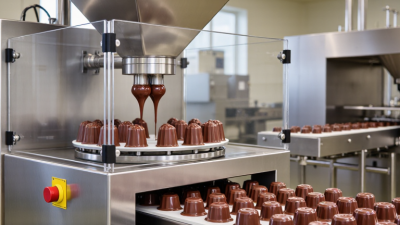
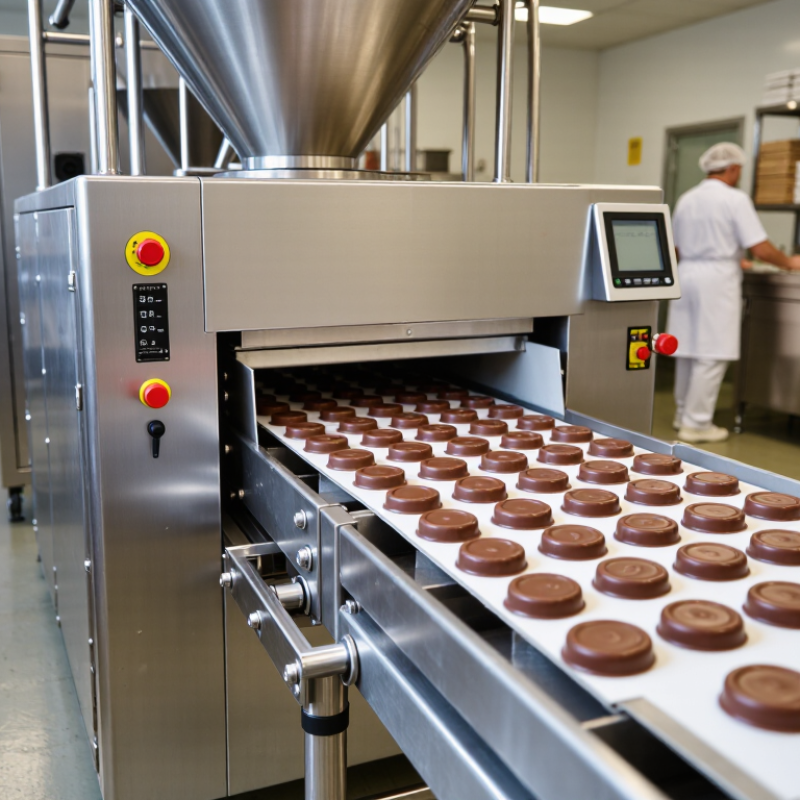
A chocolate coin maker combines four controlled stages: molding, depositing, cooling, and demolding. The mold sets the coin’s diameter, thickness, edge shape, and surface detail. A depositor then releases measured chocolate volumes into each cavity. This matters because small weight differences become expensive across thousands of pieces. Grand View Research valued the global chocolate market at USD 119.39 billion in 2023. That scale increases pressure for consistent production and lower waste.

Cooling tunnels stabilize the chocolate before demolding begins. Stable temperature prevents fingerprints, cracks, dull surfaces, and distorted edges. In practical production, cooling time changes with cocoa butter content, coin thickness, room humidity, and conveyor speed. Demolding should feel clean, not forced. Excessive pressure can damage fine details or leave chocolate inside the mold. Depositors also need regular calibration. A small dosing error may look harmless, but bulk orders expose it quickly. I have found that “faster” settings are not always better. Sometimes, they create more rejects.

Tips: Test the mold with a short run before full production. Weigh random coins from every batch. Record cooling temperature and dwell time. Keep molds clean and completely dry. PMMI’s 2024 packaging trends research highlights automation, labor efficiency, and production consistency as major manufacturing priorities. A chocolate coin maker supports these goals, but only when operators monitor the process carefully. Equipment cannot correct poor tempering or unsuitable chocolate. That part still needs judgment.

Why Choose a Chocolate Coin Maker for Bulk Orders?

Chocolate coin makers combine molds, depositors, cooling, and demolding into one production flow. The chart shows the number of finished coins obtainable from a 100 kg chocolate order at different coin weights, before process losses.

Smaller coins produce higher unit counts, while larger coins can simplify packaging and handling. Actual output depends on mold design, depositor accuracy, cooling time, and demolding efficiency.

Market Context: ICCO Reports 4.855 Million Tonnes of 2023/24 Cocoa Grindings

Why Choose a Chocolate Coin Maker for Bulk Orders?

The cocoa market gives bulk buyers an important signal. The International Cocoa Organization reports 4.855 million tonnes of cocoa grindings during the 2023/24 season. This figure reflects strong processing activity, but it does not guarantee steady demand for every chocolate format. Grindings measure processed cocoa, not finished coin orders. Buyers should study their own sales data too.

A specialized chocolate coin maker can turn large demand into consistent production. Experienced makers control tempering, mold filling, cooling, and release temperatures. These details help coins keep a clean edge and smooth surface. Ask for weight tolerances, batch records, ingredient documentation, and food-contact compliance. A reliable supplier should also explain packaging options, storage conditions, and realistic lead times. Small samples matter.

They reveal problems early.

Bulk orders often need uniform coins for gift boxes, promotions, or retail displays. Automated counting and wrapping can reduce manual handling and packaging errors. However, the cheapest quote may create hidden costs through breakage, uneven foil, or delayed delivery. I have seen specifications that looked complete but missed humidity controls. That mistake is easy to overlook. A careful buyer should test a pilot batch, review defect rates, and confirm how rejected pieces are handled. Market growth encourages production, but disciplined quality checks protect the order.

Capacity Comparison: Pieces per Hour, Batch Size, Scrap Rate, and Changeovers

Choosing a chocolate coin maker for bulk orders starts with measurable capacity, not attractive machine photos.

During production trials, record finished pieces per hour, not theoretical output. A practical line may produce 8,000 pieces hourly, while cooling pauses reduce saleable output. Piece weight matters. A 5-gram coin and a 10-gram coin require different molding times. Small details change forecasts.

Batch size affects labor, tempering stability, and inventory control.

Larger batches may improve efficiency, but they can create excess stock. I prefer testing each batch against the actual order schedule. Track scrap by cause, including broken edges, poor release, air pockets, and leftover chocolate. A 2% scrap rate sounds efficient, yet 2% of 500,000 pieces equals 10,000 coins. That is not trivial. Actual records beat estimates.

Changeovers often determine whether one machine suits multiple products.

Measure the time needed to change molds, clean contact parts, adjust temperature, and restart stable production. A 25-minute changeover repeated six times removes 2.5 hours. That loss can erase a high hourly rate. Teams often underestimate cleaning time. We did too. Allow space for operator learning, warm-up, and rejected start-up pieces. Compare good pieces per shift, batch size, scrap, and changeover time under real factory conditions.

Food-Safety Standards: HACCP and ISO 22000 Controls for Bulk Chocolate

Why Choose a Chocolate Coin Maker for Bulk Orders?

A bulk chocolate order is only as reliable as its food-safety controls. Short sentence. An experienced chocolate coin maker should use HACCP to identify biological, chemical, and physical hazards before production begins. The plan may control allergen cross-contact, foreign materials, sanitation, storage temperatures, and employee hygiene. Production teams should record ingredient lot numbers and retain samples from each batch.

ISO 22000 strengthens this process by connecting hazard analysis with a complete food-safety management system. It supports supplier checks, traceability, staff training, documented procedures, corrective actions, and regular internal reviews. On a production floor, this can mean color-coded tools, sealed ingredient bins, verified cleaning schedules, and calibrated thermometers. Metal detection and packaging inspections add another practical layer. Small details matter.

For bulk chocolate coins, consistent size and appearance are useful, but safety must remain the priority. Ask the maker for current certification details, audit scope, allergen procedures, and a traceability example. Certification alone does not guarantee perfect daily performance. Records can be incomplete. Mistakes can happen. A trustworthy manufacturer investigates deviations, documents the cause, and improves the process instead of hiding the problem. Buyers should also confirm storage conditions, packaging integrity, and recall communication before approving large production runs.

Why Choose a Chocolate Coin Maker for Bulk Orders? - Food-Safety Standards: HACCP and ISO 22000 Controls for Bulk Chocolate

Food-Safety Dimension HACCP Control Expectation ISO 22000 Framework Application to Bulk Chocolate Coins Typical Objective Evidence
Hazard analysis Identify and assess biological, chemical, and physical hazards associated with ingredients, processing, packaging, and distribution. Uses hazard analysis within a documented food-safety management system and defines controls for significant hazards. Covers cocoa ingredients, dairy or allergen-containing inclusions, foreign material, sanitation chemicals, and packaging contact materials. Approved hazard-analysis worksheet, process-flow diagram, risk-ranking records, and review approvals.
Supplier and ingredient control Control hazards introduced through raw materials by setting specifications, approval criteria, and incoming inspection procedures. Requires controlled external processes, supplier evaluation, purchasing information, and verification of supplied materials. Supports consistent control of cocoa mass, cocoa butter, sugar, milk ingredients, emulsifiers, flavorings, and foil or film packaging. Supplier approval records, ingredient specifications, certificates of analysis where applicable, and receiving logs.
Allergen management Prevent unintended allergen cross-contact through segregation, scheduling, validated cleaning, and accurate labeling. Integrates allergen controls into prerequisite programs, operational controls, communication, and verification activities. Important when producing milk chocolate, nut-containing products, or products made on shared equipment. Allergen matrix, line-clearance checklist, cleaning validation or verification results, and label approval records.
Process temperature control Define measurable limits and monitoring methods when temperature affects product safety or quality. Controls operational conditions through documented procedures, monitoring, corrective action, and verification. Supports controlled melting, tempering, depositing, cooling, and storage to protect product stability and prevent condensation-related issues. Calibrated thermometer records, temperature-monitoring logs, equipment settings, and corrective-action reports.
Foreign-material prevention Identify and control hazards such as metal, glass, hard plastic, stones, or damaged equipment parts. Establishes preventive infrastructure and operational controls, including equipment maintenance and inspection activities. Relevant to molding plates, conveyors, wrapping equipment, utensils, and bulk cartons used for chocolate coins. Pre-operation inspection forms, screen or filter checks, metal-detector checks where used, and maintenance records.
Sanitation and hygienic design Use documented cleaning and sanitation procedures to reduce contamination risks and verify their effectiveness. Treats sanitation, personal hygiene, pest control, and facility conditions as prerequisite programs supporting food safety. Helps maintain hygienic contact surfaces for tempering units, molds, conveyors, packing tables, and storage areas. Sanitation standard operating procedures, cleaning schedules, pre-operational inspections, and environmental or surface-swab results where applicable.
Traceability and batch identification Maintain records that connect finished products with ingredients, processing dates, and distribution information. Requires a traceability system capable of linking material lots through processing and delivery. Enables controlled release and targeted withdrawal of bulk chocolate coin lots if an ingredient or packaging issue is identified. Lot codes, production records, ingredient-to-batch links, packing records, and traceability-test results.
Label and packaging control Ensure labels accurately communicate ingredients, allergens, lot information, storage requirements, and applicable date markings. Controls documented information, product specifications, customer communication, and release criteria. Reduces the risk of incorrect labels or unsuitable packaging across large-volume, multi-lot orders. Approved artwork, packaging specifications, line-clearance records, label reconciliation, and finished-product release checks.
Corrective action and verification Define actions for deviations, determine disposition of affected product, and verify that the HACCP system works as intended. Uses nonconformity management, internal audits, management review, validation, verification, and continual improvement. Provides a structured response to temperature excursions, packaging errors, sanitation failures, or out-of-specification product. Deviation reports, root-cause analyses, product-disposition decisions, internal-audit reports, and verification summaries.
Bulk-order release controls Release product only after required monitoring records, inspections, and corrective actions have been reviewed. Applies documented release criteria and retains records demonstrating conformity and food-safety control. Supports consistent shipment of large quantities by confirming lot identity, packaging integrity, labeling, and storage conditions. Finished-product checklist, quality-release authorization, pallet identification, warehouse records, and dispatch documentation.

Note: HACCP and ISO 22000 requirements should be applied according to the facility’s documented food-safety plan, product formulation, process flow, destination-market regulations, and customer specifications.

Bulk Cost Analysis: Labor, Packaging, Throughput, and Payback per 1,000 Coins

Why Choose a Chocolate Coin Maker for Bulk Orders?

Bulk economics become clearer when measured per 1,000 coins. The U.S. Bureau of Labor Statistics reported food-processing wages near $17 per hour in 2023, before benefits and overtime. A manual team may need two workers for one production hour. That creates approximately $34 in direct labor per 1,000 coins. A semi-automatic chocolate coin maker can reduce handling time to 20 minutes, lowering direct labor toward $6, depending on staffing and changeover time.

Packaging also affects the result. The Packaging Machinery Manufacturers Institute identifies labor availability and packaging efficiency as major automation drivers in recent industry research. For a 1,000-coin batch, individual foil wrapping may cost $45–$80 in materials and labor. A continuous wrapping system may reduce this range, but only when pack sizes remain consistent. Small batches can erase the savings.

Throughput matters more than the advertised hourly rate. A machine rated at 3,000 coins per hour may produce fewer than 2,000 after tempering, cleaning, rejects, and refill delays. In a practical model, saving $28 per 1,000 coins and producing 20,000 coins monthly creates $560 in monthly savings. A $16,800 system would show a 30-month payback. That estimate is imperfect. Maintenance, training, chocolate waste, and seasonal downtime deserve separate calculations. Trial production often exposes the missing costs.