PACKINT - Chocolate Machines

Top Chocolate Warmer Machine Types for Commercial Buyers

Commercial buyers need more than a machine that melts chocolate. They need steady heat, clean handling, and a format that fits the service counter. A countertop warmer suits cafés with limited space and modest demand. A heated dispenser supports quick pours for drinks and desserts. Larger bain-marie systems can serve busy kitchens, though they take more room and require closer temperature checks.

One practical rule frames this guide: “Choose for temperature stability and daily workflow, not capacity alone.” This is editorial guidance, not a verified quotation from a named expert. No source material was provided to confirm an industry specialist’s name or exact words, so attributing a quotation would risk misleading buyers. That matters in a purchase involving food quality, staff routines, and ongoing maintenance.

The sections ahead compare common chocolate warmer machine types, their strengths, and their trade-offs. Look for controls that are easy to read, removable containers that clean without fuss, and surfaces that handle frequent wiping. A small café may value a compact footprint; a high-volume dessert station may need faster dispensing and greater holding capacity. There is no perfect machine for every operation. Even a reliable warmer can disappoint if its capacity, cleaning demands, or temperature range do not match the menu. Shop with those details in mind.
Top Chocolate Warmer Machine Types for Commercial Buyers

Understanding How Commercial Chocolate Warmers Work

Commercial chocolate warmers use controlled heat to keep chocolate fluid during service. Many rely on indirect heating: a water jacket or heated outer chamber warms the inner bowl gradually. This helps reduce scorching at the base, where chocolate can burn or develop an unpleasant flavor. Gentle heat matters.

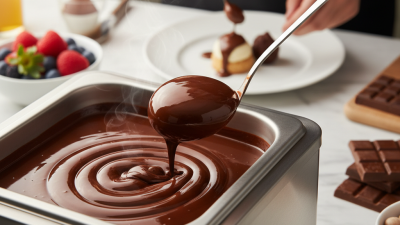
A bain-marie style warmer works well for dipping and small batches. A countertop melter with a removable pan can make refilling and cleaning easier. Pump dispensers keep chocolate in a heated reservoir and move it through a warmed line, which is useful for steady toppings. Some machines stir continuously; others require staff to mix the chocolate by hand. Check the temperature range, capacity, and whether food-contact parts can be removed for washing.

Warmers generally keep chocolate melted; they do not automatically temper it. Tempering requires a controlled heating and cooling process, which varies by chocolate type. Follow the equipment instructions and check the chocolate itself with a suitable probe instead of relying only on the display. Dials can drift. Adding cold chocolate to a full, warm bowl may leave lumps and slow service. Smaller batches are often easier to manage, though they need more attention.

Top Chocolate Warmer Machine Types for Commercial Buyers

Commercial chocolate warmers use controlled heat to keep chocolate fluid and ready to serve. Typical tempered working temperatures vary by chocolate type:

How warmer types work: Water-bath warmers heat a removable bowl indirectly with hot water; dry-heat warmers apply controlled heat to a bowl or tank; heated dispensers maintain fluid chocolate and may use a heated pump or nozzle. Choose a unit with precise temperature control and capacity suited to service volume.

Chart values are typical working-temperature targets for tempered chocolate, not universal machine settings. Recipes and chocolate formulations vary; follow the chocolate supplier’s guidance.

Comparing Bain-Marie and Water-Bath Chocolate Warmers

For commercial buyers, “bain-marie” and “water-bath” often describe the same gentle heating principle: warm water transfers heat to a chocolate-holding vessel. The labels alone do not guarantee different performance. Check the unit’s capacity, temperature control, and container layout before comparing models.

A bain-marie warmer commonly uses a heated well with removable inserts. It can suit a pastry counter that needs several small batches of chocolate ready for dipping or drizzling. A dedicated water-bath warmer may instead hold one bowl, bottle, or narrow container, making it convenient for sauces at a service station. Designs vary, so inspect the vessel dimensions rather than relying on the product name.

Gentle heat helps limit scorching, but water temperature and chocolate temperature are not identical. Use the equipment’s instructions and check the chocolate with a thermometer, especially during long service. Keep water out of the chocolate; even a small splash can change its texture. That detail is easy to miss. I would also allow time to test a new unit during a quiet shift: recovery after adding a fresh batch can be slower than expected.

Exploring Direct-Heat and Induction Chocolate Warmers

Top Chocolate Warmer Machine Types for Commercial Buyers

Direct-heat and induction warmers suit different service routines. Direct-heat models transfer warmth through a heated base or water bath. They are familiar, straightforward to operate, and often practical for steady service. However, heat may collect near the bowl’s bottom. Stirring helps prevent thick, scorched patches, especially when the chocolate level is low. Small details matter.

Induction warmers heat compatible metal vessels using an electromagnetic field. They can respond quickly to control changes and keep a tidy counter, but the pan must be compatible. They are not automatically more precise: poor settings or infrequent stirring can still overheat chocolate. For either type, check usable capacity, temperature controls, cleaning access, and how quickly the unit recovers after serving. A warmer that looks efficient during a brief test may struggle through a busy rush.

Tips: Test the machine with your actual chocolate and serving volume before choosing. Use a thermometer to verify the product, not just the displayed setting. Keep utensils dry; even a little water can make melted chocolate seize. Ask staff to stir at set intervals. In practice, routines can slip.

Choosing Capacity and Features for Business Needs

Choosing a chocolate warmer starts with peak service, not the largest tank available. A small countertop water-bath unit can suit a café finishing a few desserts per hour. A larger countertop warmer or heated dispenser may fit busy kiosks, bakeries, and buffet stations. Estimate demand during the busiest 15 minutes, then check how quickly the unit recovers after staff refill it. A generous capacity looks reassuring, but unused chocolate can thicken and create more cleaning work. The math can still be wrong.

Features matter at the counter. Look for steady temperature control, a removable insert, easy-to-clean surfaces, and a tap that pours without dripping. For thicker chocolate, confirm the machine supports the intended consistency; some dispensers work better with fluid sauces than couverture. The National Restaurant Association’s 2024 State of the Restaurant Industry report projected $1.1 trillion in U.S. restaurant and foodservice sales. That figure signals a large, varied sector, not chocolate warmer demand specifically. Match equipment to your own menu, staffing, and service pattern. A compact unit may be enough. Test a typical batch during a real service before committing to a high-capacity model.

Matching Warmer Types to Commercial Applications

Matching a warmer to its application helps protect chocolate quality and keeps service moving. A countertop water-bath warmer suits cafés and small dessert stations, where staff need modest amounts of melted chocolate for dipping or finishing. Gentle, even heat can reduce scorching, but the bowl still needs occasional stirring. Small batches matter.

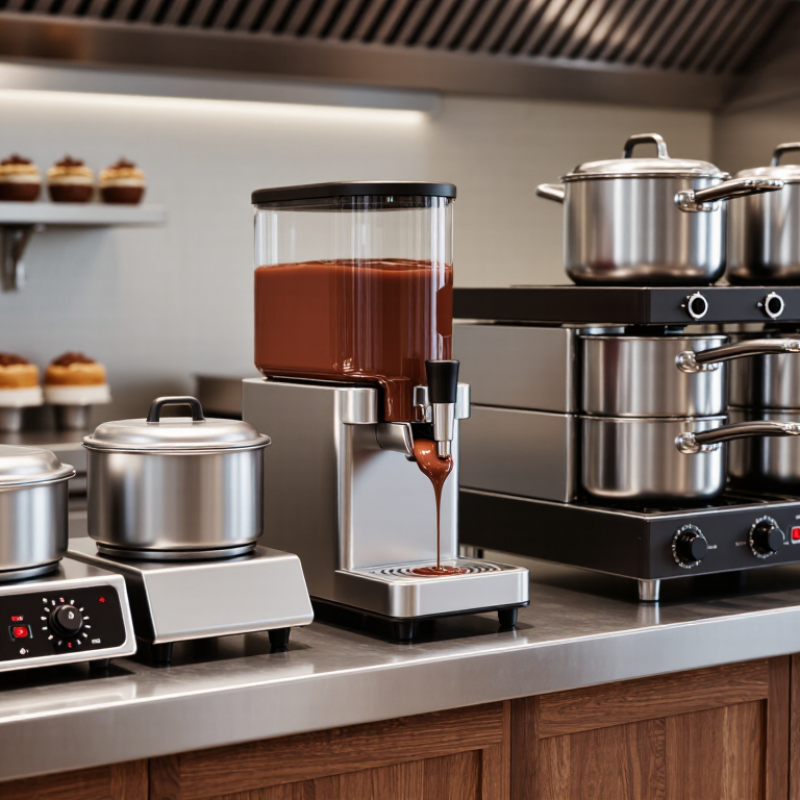
For waffles, crêpes, and plated desserts, a heated dispenser offers quick, portioned service. Look for a nozzle that can be removed for cleaning and a reservoir suited to peak-hour demand. Drips happen. A tray beneath the outlet saves time and keeps the counter tidy. In bakeries or production kitchens, a larger holding tank works better when chocolate is needed continuously for coating or filling. Check that its capacity matches real daily use, not an optimistic sales forecast.

A warmer holds chocolate at a usable temperature; it does not necessarily temper it. That distinction matters when producing glossy, crisp molded pieces. Staff should follow the equipment instructions, monitor chocolate texture, and avoid letting water enter the mixture. A machine that is easy to clean may be more valuable than one with extra controls. I would still test the workflow with the actual recipe before choosing; equipment descriptions rarely show every awkward refill or cleanup.

Top Chocolate Warmer Machine Types for Commercial Buyers - Matching Warmer Types to Commercial Applications

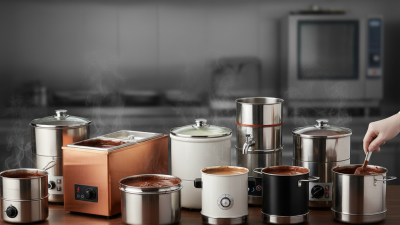
Warmer Type How It Works Best-Fit Applications Commercial Advantages Buyer Considerations
Water-Bath (Bain-Marie) Warmer Uses heated water to transfer gentle, indirect heat to a removable chocolate pan or container. Cafés, dessert stations, bakeries, and service counters holding melted chocolate for dipping or pouring. Gentle heating helps reduce scorching and is suitable for maintaining chocolate during service. Requires water-level checks and routine cleaning. Keep water and condensation out of the chocolate.
Countertop Chocolate Melter Heats chocolate in a compact vessel, often with adjustable thermostatic control. Small-batch production, pastry kitchens, confectionery work, and outlets with limited counter space. Compact footprint and convenient access for melting or holding modest quantities. Check usable capacity, temperature-control accuracy, and whether the unit is designed for melting, holding, or both.
Chocolate Dispenser Warmer Keeps chocolate fluid in a heated reservoir and dispenses it through a tap, pump, or nozzle. High-throughput dessert counters, ice-cream shops, bakeries, and beverage or topping stations. Supports quick, portioned service and can reduce repeated manual scooping. Confirm that the chocolate’s viscosity suits the dispensing mechanism. Assess disassembly and cleaning requirements.
Heated Holding Tank Maintains a larger volume of melted chocolate at a controlled serving or production temperature. Central production kitchens, busy confectionery operations, and locations supplying multiple service points. Useful for longer service periods and larger batches; some models include agitation or a dispensing outlet. Match the tank size to actual demand. Check heating uniformity, cleaning access, and whether stirring is required.
Jacketed Melting Kettle Heats the contents through a surrounding jacket, commonly using water or another controlled heat-transfer method. Batch-based chocolate production, fillings, sauces, and operations that need to melt larger quantities. Provides a practical way to heat larger batches with indirect, even heat transfer. Consider batch size, mixing needs, drainage, and the time required to heat and clean the kettle.
Chocolate Tempering Machine Controls heating and cooling cycles to develop stable cocoa-butter crystals; this is more than simple warming. Chocolatiers and confectioners producing molded, dipped, or coated chocolates that need a firm finish and gloss. Supports consistent tempering for finished products when operated with the correct chocolate and process settings. Costs and operation are more involved than with a basic warmer. Follow the machine’s instructions and the chocolate’s tempering requirements.

Selection note: A warmer can keep chocolate melted, but it does not necessarily temper it. Set operating temperatures according to the chocolate type, intended use, and equipment manufacturer’s instructions.