How to Choose the Right Fuse Terminal Blocks for Your Needs?
Selecting the right Fuse Terminal Blocks is crucial for any electrical project. These components ensure safety and reliability in electrical systems. Understanding their features and specifications can seem daunting. However, taking a closer look can simplify the process.
Fuse Terminal blocks come in various shapes and sizes. They serve different purposes, catering to both residential and industrial needs. It is essential to consider factors like amperage, voltage rating, and physical configuration. Sometimes, the perfect match is not so obvious. You may find yourself overwhelmed by options.
Consider your specific requirements and research thoroughly. Consulting with experts can provide valuable insights. Trustworthy manufacturers can guide you toward quality products. Reflect on previous experiences to avoid common pitfalls in selection. Choosing the right fuse terminal blocks can impact safety and performance. Take your time to make an informed decision.
Understanding Fuse Terminal Blocks and Their Applications
Fuse terminal blocks play a crucial role in electrical assemblies. They provide protection by housing fuses, which safeguard circuits from overcurrent. Understanding their applications is vital for effective selection. According to a report by the International Electrotechnical Commission, the global fuse market is expected to reach $3.5 billion by 2025, highlighting the increasing reliance on these protective devices.
In industrial settings, fuse terminal blocks are essential in circuit protection and management. They are used in various applications, including machinery, automation systems, and panel building. Choosing the right type involves assessing voltage ratings and current capacities. Compatibility with the installed equipment is also paramount. Sometimes, professionals overlook the impact of environmental factors. High temperatures or humidity can significantly affect fuse performance.
Tips: Always verify the specifications and installation requirements. Consider climate conditions where the terminals will operate. Regular maintenance and inspection can prevent failures and enhance longevity. Understanding manufacturer guidelines can lead to better fuse choices. It’s crucial to remember that each application has unique requirements. If in doubt, consulting with experts in electrical engineering can provide clarity and ensure safety.
How to Choose the Right Fuse Terminal Blocks for Your Needs?
| Type of Fuse Terminal Block | Current Rating (A) | Voltage Rating (V) | Number of Poles | Applications |
| Standard Fuse Terminal Blocks | 10 - 25 | 250 | 2, 4, 6 | Industrial Equipment, Electrical Panels |
| Miniature Fuse Terminal Blocks | 1 - 10 | 125 | 1, 2 | Small Appliances, Consumer Electronics |
| High Current Fuse Terminal Blocks | 25 - 100 | 500 | 1, 2, 3 | Power Distribution, Heavy Machinery |
| Automotive Fuse Terminal Blocks | 10 - 30 | 12 | 6, 8 | Vehicle Electrical Systems |
Key Factors to Consider When Selecting Fuse Terminal Blocks
When selecting fuse terminal blocks, several key factors come into play. First, consider the rated current and voltage. According to industry reports, choosing a block with an inadequate rating can lead to system failures. It is essential to match the block's ratings to your application requirements. The ideal fuse terminal block must handle the electrical load without overheating.
Next, examine the physical size and mounting options. A comprehensive study indicated that improper sizing can lead to installation challenges. Finding a compact design that fits well within your system enclosure can simplify the installation process. Additionally, terminals must accommodate the conductor sizes typical in your application, ensuring tight and secure connections.
Lastly, consider the environmental conditions. Data shows that factors such as temperature and humidity can affect performance. Choose blocks with materials resistant to corrosion for outdoor applications. Reflect on the specific challenges your installation might face. Conducting a thorough analysis will help avoid potential issues and enhance reliability.
Different Types of Fuse Terminal Blocks and Their Features
Fuse terminal blocks serve a crucial role in electrical systems, providing secure and efficient connections. Various types are available, each designed for specific applications. Understanding these types will help you make informed decisions.
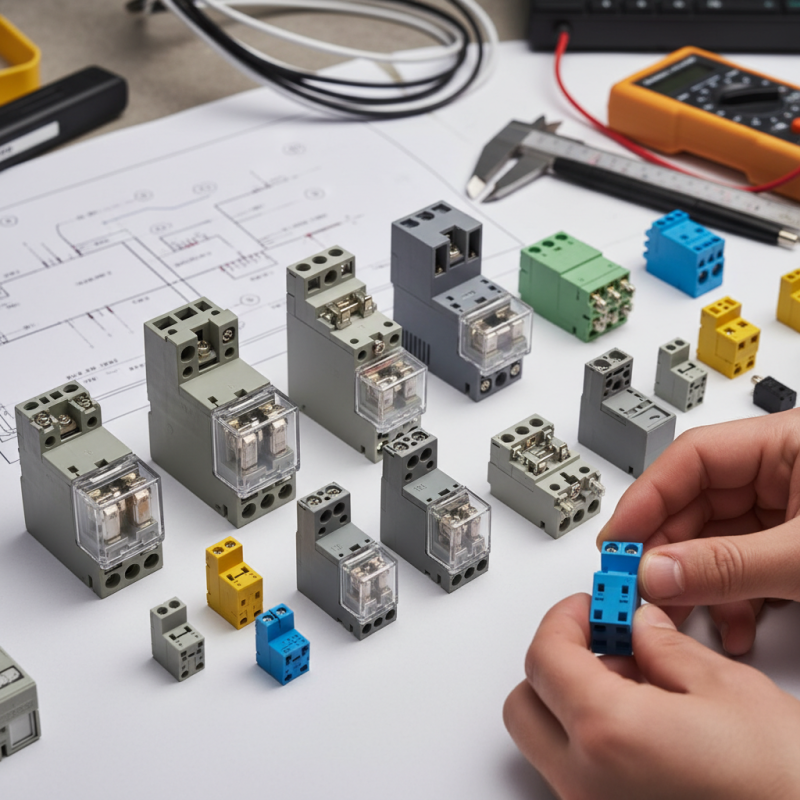
One common type is the cartridge fuse terminal block. It accommodates standard cartridge fuses, ideal for protecting circuits against overloads. These blocks often feature clear covers, allowing easy visibility of the fuse status.
Another prevalent option is the fuse holder terminal block. This design offers quick fuse replacement, which can be critical in maintenance scenarios.
Miniature fuse terminal blocks are also noteworthy. They are compact and often used in tight spaces. Despite their small size, they maintain reliable performance. It's essential to consider the rated current and voltage when selecting these blocks. Misjudgment in specifications can lead to electrical failures.
Ultimately, the right choice depends on your specific requirements and the application environment. Selecting the wrong type may result in inefficiencies or even damage to equipment.
How to Evaluate Compatibility with Your Electrical System
When choosing fuse terminal blocks, compatibility with your electrical system is crucial. Start by examining your current setup. The voltage and current ratings of the fuse must match those of your system. Double-check specifications for both devices to avoid mismatches that could lead to failures.
Look at the physical dimensions of the terminal blocks. Ensure that they fit your existing panel or enclosure. Measure the space and compare it to the dimensions of potential blocks. Unexpectedly tight spaces can complicate installation, leading to future issues. The material of the terminal block also affects reliability. Choose materials that can withstand your operating environment.
Finally, consider the application requirements. Different setups may need various fuse types. Assess whether you need fast-acting or time-delay fuses. Make sure the fuse terminal blocks offer flexibility for future adjustments. This foresight can prevent larger problems down the line. Compatibility isn’t just about immediate needs; it’s also about planning for growth.
Common Mistakes to Avoid When Choosing Fuse Terminal Blocks
Choosing the right fuse terminal blocks can be tricky. One common mistake is not considering the amperage rating. According to industry reports, nearly 30% of electrical failures are due to improper amperage selection. Always match the fuse rating with the application. Overestimating the required amperage can lead to equipment damage.
Another pitfall is overlooking the environmental factors. For instance, terminals need protection from dust or moisture. Failing to account for these conditions can shorten the lifespan of the blocks. Always check IP ratings, especially in industrial settings. A 2019 study showed that terminals installed in harsh conditions failed five times more often than those in controlled environments.
Additionally, many buyers ignore the importance of connectability options. Some blocks offer screw terminals, while others use spring-loaded or push-fit types. Understanding your connection needs will lead to better reliability. Misjudging this aspect could lead to frequent disconnects or increased maintenance. Taking these factors into account will enhance performance and safety.
