How to Choose the Best Manual Linear Stage for Your Needs?
Choosing the right Manual Linear Stage can be daunting. With numerous options available, it’s essential to identify what suits your needs. This equipment plays a critical role in precision applications.
When selecting a Manual Linear Stage, consider factors like load capacity and travel range. These parameters directly influence your work's effectiveness. Many users overlook these details, leading to subpar performance. It’s vital to reflect on your specific requirements.
Additionally, the quality of materials matters. A durable Manual Linear Stage can withstand consistent use. However, some lower-end models might fail faster than expected. Investing in high-quality components typically pays off in the long run. Don't rush the decision; patience ensures better outcomes.
Understanding Manual Linear Stages and Their Applications
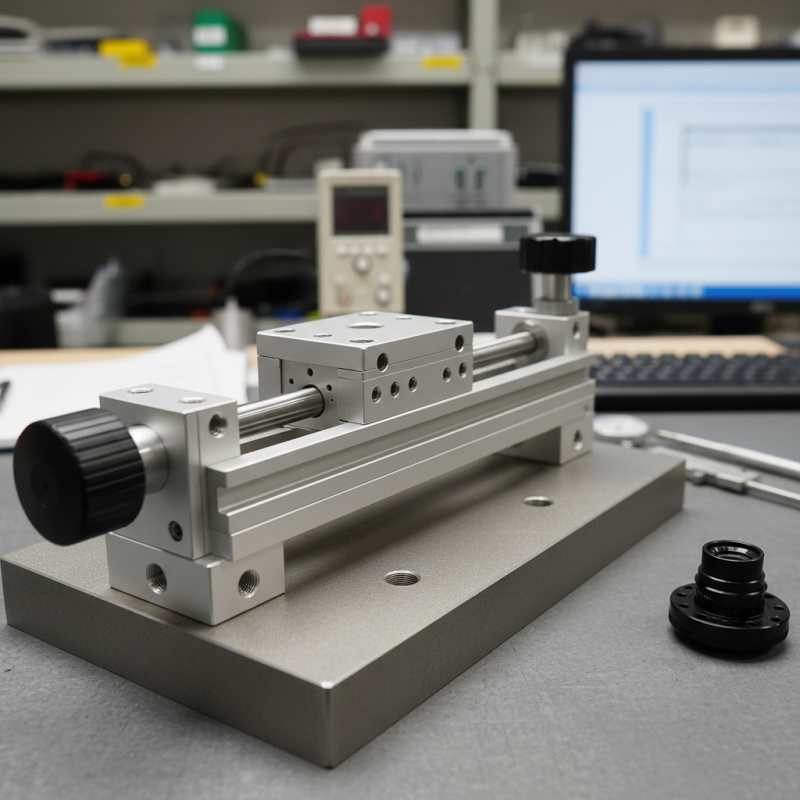
Manual linear stages are essential tools in precision movement and positioning across various applications. They allow for controlled, accurate adjustments in scientific research, manufacturing, and other technical fields. These stages consist of a linear guide, a drive mechanism, and a stage platform. The moveable platform can be adjusted precisely to meet specific requirements.
When selecting a manual linear stage, it's important to consider its application. Some stages work best for delicate tasks, while others can handle heavier loads. It can be challenging. For instance, a stage that performs well in a laboratory might not suit a manufacturing environment where robustness is critical. Users often overlook load capacity or precision requirements, leading to inefficient operations.
Another aspect to think about is the ease of use. Some manual stages can be complicated to operate, frustrating users. Ease of adjustment and stability during movement are key. If an operator struggles, it may lead to inaccuracies. Ensure that the chosen stage is user-friendly and fits the environment where it will be utilized. Factors like these are vital for an effective setup.
Key Factors to Consider When Selecting a Manual Linear Stage
When selecting a manual linear stage, it’s crucial to consider several factors. Start with load capacity. The stage needs to support the weight of your application. If it’s too light, you might face stability issues. Precision is another key aspect. Look for stages that allow for fine adjustments. This can impact the overall performance significantly.
Next, consider the travel range. Different projects may require different lengths of movement. Ensure the stage can cover your specific range without limitations. The construction material can affect durability and performance. A robust design is necessary for consistent use.
Finally, think about ease of use. Complexity can lead to frustration. If it’s difficult to operate, it may not be the right choice. Reflect on your needs carefully. Sometimes, a simpler design is more effective. A well-thought-out decision will pay off in the long run.
How to Choose the Best Manual Linear Stage for Your Needs?
| Feature | Considerations | Recommended Options |
| Travel Range | Select based on application requirements. | 100mm, 200mm, 300mm options |
| Load Capacity | Ensure it can handle the weight of your equipment. | Up to 10kg, 20kg, 30kg |
| Precision | Choose based on required accuracy level. | 1µm, 5µm, 10µm |
| Drive Mechanism | Consider handwheel, rack and pinion, screw drive. | Manual, Servo, Stepper |
| Build Material | Material impacts durability and weight. | Aluminum, Stainless Steel |
| Budget | Determine your spending limit. | $200 - $2000 |
Types of Manual Linear Stages and Their Features
When choosing a manual linear stage, it's crucial to understand the different types available. Each type has unique features that can cater to specific applications. For instance, a standard manual linear stage typically uses a simple screw drive mechanism for straightforward linear motion. This type is reliable and easy to operate, making it a popular choice for many users.
Alternatively, a micrometer stage allows for fine adjustments, ideal for precision tasks. It can move in smaller increments, which is perfect for tasks requiring high accuracy. In contrast, a motorized manual stage combines the best of both worlds. Although it adds complexity, it can also enhance efficiency by allowing remote operation.
Consider your workspace too. Some stages are designed with a compact form factor. They save valuable space. However, a larger stage may offer better stability and more features. Be aware that selecting a manual linear stage is not always straightforward. It requires careful thought about dimensions, load capacity, and travel range. Failing to account for your specific needs can lead to inefficiencies or frustration down the line. Each decision impacts performance and usability.
How to Assess Precision and Stability in Linear Stages
Precision and stability are critical in selecting a manual linear stage. They directly impact the quality of your work. According to the "Precision Motion Systems Report 2022," devices with high precision typically have repeatability of 1 micron or better. However, achieving this level requires careful consideration of multiple factors, including environment and mechanical setup.
Stability involves several aspects. Temperature fluctuations can cause expansion or contraction in materials. This can lead to errors in positioning. A study by the International Journal of Metrology revealed that even a 1°C change can result in a position shift of approximately 0.5 microns in some setups. Furthermore, the mounting setup must be rigid yet adjustable. A poorly mounted stage can vibrate and compromise precision.
Some linear stages may appear stable at a glance, but their real-world performance can vary significantly. This discrepancy often stems from overlooked factors like load limits and surface friction. Choosing a model that meets all your requirements can be challenging. It is crucial to look beyond specifications and consider real-world applications. Always assess whether the stage can maintain its precision under your specific operational conditions.
Tips for Budgeting and Sourcing Manual Linear Stages
When budgeting for a manual linear stage, it's essential to assess both your technical requirements and financial constraints. Data from industry reports indicate that precision motion systems will see a demand growth of around 5% per year through 2025. Understanding your operational needs can help narrow down choices. Many users find it beneficial to consider the load capacity, travel distance, and resolution before making a final decision.
Here are some tips for sourcing manual linear stages effectively. Evaluate the specifications carefully. User reviews often highlight performance attributes that specifications may not convey. Establish a budget that allows for flexibility; operational costs may include accessories or additional components. Aim for a balance between cost and quality, keeping in mind that the cheapest option isn't always the best.
Do not overlook the importance of supplier reliability. A report from a recent market analysis showed that customer satisfaction scores often correlate with support and service levels. Consult technical experts if necessary. Local sourcing might offer quicker support. Long-term value should guide your choice, even if it requires a higher initial investment. It’s a complex decision, but reflection on your specific needs can drive better outcomes.
Comparison of Manual Linear Stages by Load Capacity and Price