How to Choose the Best Kitchen Hood Centrifugal Fan for Your Needs?
Choosing the right Kitchen Hood Centrifugal Fan can greatly impact your cooking experience. Charles Fields, a leading expert in kitchen ventilation systems, once said, "The right fan transforms your kitchen into a haven." This highlights the importance of selecting a fan that fits your unique needs.
Kitchen Hood Centrifugal Fans come in various sizes and power levels. Understanding your kitchen layout is crucial. For instance, a compact kitchen may require a smaller fan that efficiently expels smoke and odors without overpowering the space. In contrast, larger kitchens benefit from more powerful fans to ensure proper air circulation.
Choosing a fan is not just about power. Noise levels and energy efficiency matter, too. A fan operating at a high decibel can disrupt your cooking experience. Evaluating noise ratings can save you from regret later on. Ultimately, a thoughtful selection process is key to enhancing your kitchen environment with a suitable Kitchen Hood Centrifugal Fan.
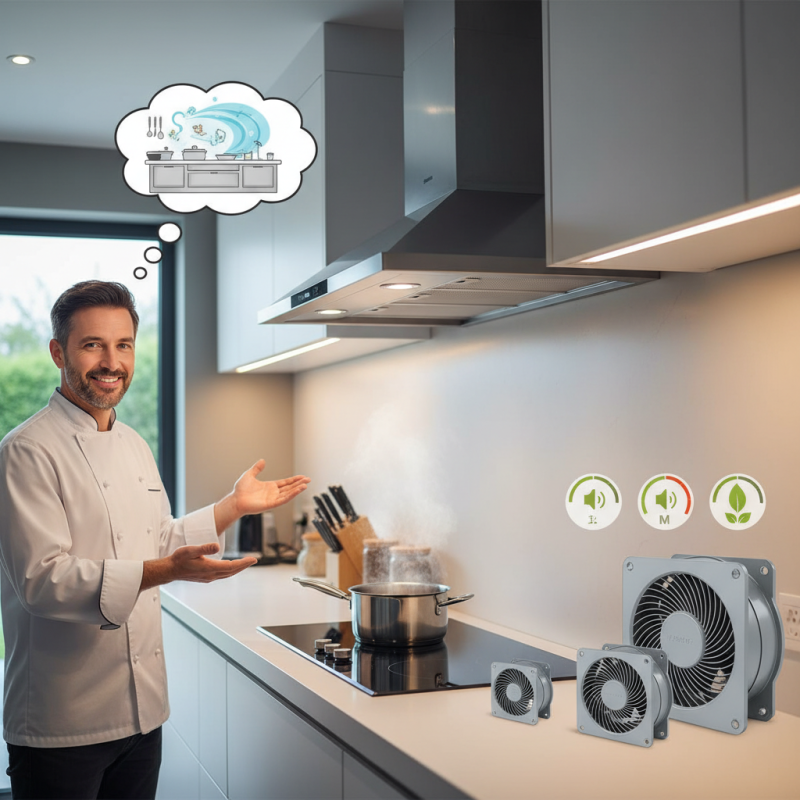
Understanding the Function of Kitchen Hood Centrifugal Fans
When considering kitchen hood centrifugal fans, understanding their function is crucial. These fans effectively remove smoke, heat, and odors from cooking spaces. They draw air up and push it outside, helping maintain a clean and comfortable kitchen environment. The right ventilation can reduce the buildup of grease and moisture, protecting your home.
Choosing the correct fan involves knowing your kitchen's size and layout. Measure the space to ensure adequate airflow. Fans are available in various sizes and power levels, which affects their efficiency. A stronger fan may produce more noise, so consider sound levels in your selection.
Tips for optimal use include regular maintenance. Clean filters and fan blades to keep performance high. Replace worn parts as needed. Also, ensure the installation is airtight to prevent leaks. Over time, reassess your needs. Changes in cooking habits might necessitate a different fan. Reflecting on these aspects ensures that you choose the best centrifugal fan for your kitchen.
Key Factors to Consider When Selecting a Kitchen Hood Fan
Choosing the right kitchen hood centrifugal fan is crucial. Consider your kitchen size and the fan's airflow capacity. A fan with too low an airflow will struggle to clear smoke and odors. Conversely, too powerful a fan can lead to unnecessary noise and energy consumption.
Check the noise levels.
A fan with high CFM can sound quite loud. Look for models with sound ratings that fit your kitchen environment. Noise could disrupt your cooking experience if not considered.
Tips: Measure the kitchen before purchasing. Understanding the layout helps in selecting the right fan size. Look for features like adjustable speeds, which offer versatility for different cooking needs. Also, consider ease of cleaning. A fan that collects grease can become a hassle. Regular maintenance should be easy to perform, ensuring longevity and efficiency.
The design can also impact your kitchen aesthetic. Choose a look that complements your space while remaining functional. It's important to balance style and substance for the best results. Not all fans perform equally, so investigate user reviews for insights.
Types of Kitchen Hood Centrifugal Fans and Their Applications
When choosing a kitchen hood centrifugal fan, understanding the types and their applications is crucial. Centrifugal fans primarily come in two types: radial and diagonal. Radial fans are known for high pressure and are often used in large commercial kitchens. They efficiently expel smoke, moisture, and odors. Diagonal fans are better suited for residential settings. They operate quietly and provide good airflow, making them ideal for home chefs.
Consider the space where you’ll install the fan. An exhaust system that fits the kitchen layout enhances efficiency. Measure the kitchen size and assess the cooking intensity. These factors greatly influence your fan selection.
Tip: Always check the fan's airflow rating. An airflow rating that meets your kitchen needs is essential.
Another factor is maintenance. Easy-to-clean fans can save you time and ensure optimal operation. Keep in mind that some fans require more upkeep. Be ready to invest effort in maintenance.
Tip: Look for fans with removable parts. This feature can simplify the cleaning process.
How to Choose the Best Kitchen Hood Centrifugal Fan for Your Needs?
| Fan Type | Airflow (CFM) | Noise Level (dB) | Application | Installation Type |
| Inline Fan | 400 - 1200 | 50 - 70 | Residential Kitchens | Ducted |
| Wall-Mounted Fan | 300 - 900 | 55 - 75 | Commercial Kitchens | Surface Mounted |
| Island Hood Fan | 500 - 1500 | 60 - 80 | Open Kitchen Layouts | Suspended |
| Under-Cabinet Fan | 200 - 600 | 50 - 65 | Small to Medium Kitchens | Built-in |
| Ceiling-Mounted Fan | 350 - 900 | 55 - 70 | High Ceiling Kitchens | Recessed |
Assessing Noise Levels and Energy Efficiency in Kitchen Fans
When choosing a kitchen hood centrifugal fan, noise levels significantly impact your cooking experience. Fans with high noise ratings can be disruptive, making it hard to enjoy conversations or listen to music. Look for models that prioritize quiet operation. Some fans use advanced technology to minimize noise while maintaining airflow. Checking user reviews can provide real-world insights on noise levels.
Energy efficiency is another crucial factor. High-efficiency fans can reduce electricity bills and benefit the environment. Many models offer features like multiple speed settings, allowing you to choose the most efficient level for your cooking needs. Energy Star certification is a good indicator of efficiency. However, it’s essential to balance energy use with power, as a very low-power fan might struggle to keep your kitchen adequately ventilated.
Considering both noise and energy efficiency can seem challenging. You might need to prioritize one over the other based on your cooking habits. It’s worth revisiting your choice if the initial pick doesn't perform as expected. Try to reflect on how often you use the fan and in what settings. This insight can guide you toward a better decision next time.
Noise Levels and Energy Efficiency of Kitchen Hood Centrifugal Fans
This chart showcases the noise levels (in decibels) and energy efficiency ratings (in watts) of various kitchen hood centrifugal fans. The comparison helps consumers assess which fan meets their needs in terms of silent operation and energy consumption.
Installation and Maintenance Tips for Optimal Fan Performance
Installing a kitchen hood centrifugal fan requires careful consideration. Begin with accurate measurements of your kitchen space. A fan that’s too large may overwhelm the area, while a small one might not effectively remove odors and smoke.
Check the ducting system in your kitchen. Proper airflow is crucial for optimal performance. The duct should be as straight as possible, with minimal bends to prevent air resistance.
Routine maintenance keeps your fan functioning efficiently. Periodically inspect the fan for dirt and grease build-up. Clean filters regularly to ensure maximum airflow. A clean fan is a powerful fan. If you notice unusual noises, it could signify wear or loose components. Address these issues promptly to avoid bigger problems.
Lastly, don’t forget about the fan’s location. Proper positioning enhances performance. Install it close to the cooking area but ensure it doesn’t interfere with your cooking space. Balancing placement and efficiency sometimes requires adjustments. Regular checks can prevent minor issues from escalating into costly repairs. A little attention goes a long way in extending the life of your kitchen hood fan.
