
China Top 10 Shorts Legging Printer Suppliers?
Choosing a reliable Shorts Legging Printer requires more than comparing factory prices. Production quality often depends on fabric handling, ink performance, stitching control, and communication speed. This guide introduces ten Chinese suppliers serving sportswear, activewear, and custom apparel brands. It focuses on practical evidence, not attractive promises.
Each supplier is considered through clear purchasing criteria. These include printing technology, polyester and spandex compatibility, color accuracy, minimum order quantities, sample services, production capacity, and quality inspection procedures. Details such as fabric weight, stretch recovery, waistband construction, and wash resistance can affect customer satisfaction. A strong supplier should provide samples before bulk production and explain its process clearly.
Experience matters here. A printed legging may look excellent under factory lighting but fade after repeated washing. That risk deserves attention. Supplier websites and marketplace profiles can also become outdated, so buyers should verify certifications, equipment, lead times, and export experience directly. Public information is useful, but it is not perfect evidence. Rankings may change as factories upgrade machinery, adjust pricing, or change their service teams.
This overview is designed to support a careful sourcing decision. It does not treat every supplier as equally suitable for every brand. A small startup may need flexible quantities, while an established retailer may prioritize automated production and consistent color matching. Requesting a recent sample, production video, and written quotation can reveal important differences. Good questions matter. The final choice should reflect product goals, budget, quality expectations, and responsible manufacturing requirements.
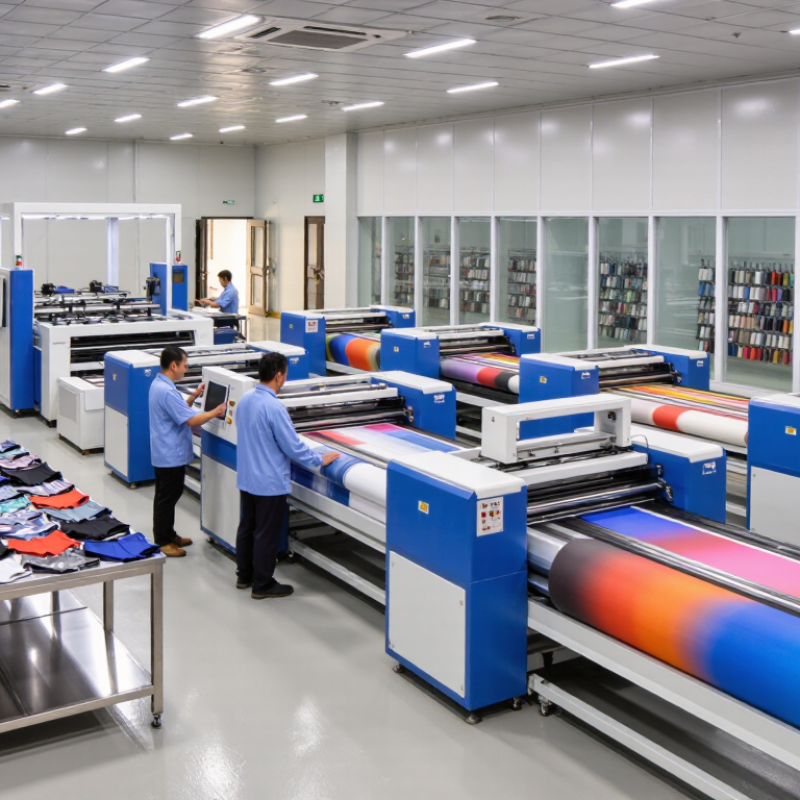
What Is a Shorts Legging Printer and How Does It Work?
A shorts legging printer creates colorful graphics on stretch fabrics used for athletic shorts, yoga leggings, and sportswear. It usually works with polyester or polyester-rich materials. The machine applies special textile ink through tiny print heads. The design may be printed directly onto the fabric. It may also be printed onto transfer paper first.
In sublimation printing, heat changes the ink into gas. Pressure and temperature push the color deep into the polyester fibers. The result feels smooth because the image does not sit heavily on the surface. Direct-to-fabric systems follow a different route. They print onto treated fabric, then use heat to cure the ink. This method requires careful control of fabric tension, ink volume, and drying time. Small errors can create blurred edges or uneven color. The process sounds simple, but it is not.
Tips: Test a fabric sample before production. Check stretch recovery after printing. Use a color chart because screen colors can mislead you. Keep fabric flat and dust-free. Measure heat and pressure with calibrated tools. Experienced operators still review the first pieces manually. A design that looks perfect digitally may lose detail on ribbed or highly elastic fabric. That lesson is easy to overlook.
| No. | Anonymous Supplier Profile | Main Printing Technology | Best-Suited Shorts or Legging Fabric | How the Printing Process Works | Typical Production Advantage | Important Purchasing Check |
|---|---|---|---|---|---|---|
| 1 | High-volume sublimation equipment supplier | Roll-to-roll dye sublimation | White polyester and polyester-rich stretch fabric | The design is printed onto transfer paper, then heat is applied so the dye changes into gas and bonds with polyester fibers. | Suitable for continuous fabric production and all-over sportswear graphics. | Confirm paper compatibility, calender temperature control, take-up tension, and color-management support. |
| 2 | Direct-to-fabric textile printer supplier | Direct disperse-dye printing with fixation | Polyester fabric prepared for direct dye-sublimation printing | Ink is deposited directly on the textile, followed by drying and heat fixation to improve dye bonding and wash durability. | Removes the transfer-paper step and can reduce paper handling in suitable workflows. | Ask about pre-treatment, fixation equipment, ink penetration, and fabric-width support. |
| 3 | Direct-to-film apparel printer supplier | DTF printing with hot-melt adhesive powder | Polyester, cotton, blends, and many stretch garments | The image is printed on PET film, coated with adhesive powder, cured, and transferred to the garment using a heat press. | Works across more fabric types and is suitable for logos, artwork, and small-to-medium orders. | Evaluate stretch recovery, powder curing consistency, film release, and wash-test results. |
| 4 | Direct-to-garment printer supplier | DTG pigment-ink printing | Cotton and cotton-rich shorts or leggings | The garment is pre-treated, inkjet-printed, and heat-cured so the pigment ink forms a durable surface layer. | Useful for photographic designs and personalized garments without screen setup. | Check garment platen size, pretreatment uniformity, ink flexibility, and curing requirements. |
| 5 | Pigment textile printer supplier | Direct pigment inkjet printing | Cotton, linen, viscose, and selected blended textiles | Pigment ink is printed onto prepared fabric and fixed with heat; the ink remains mainly on the fiber surface. | Can print on various fiber classes without the same dye-fiber reaction required by reactive dyes. | Verify pretreatment chemistry, hand feel, rubbing resistance, and laundering performance. |
| 6 | Reactive textile inkjet supplier | Reactive dye printing | Cotton and other cellulosic fibers | Reactive dye ink is printed, dried, steamed to bond with cellulose, then washed to remove unfixed dye. | Provides soft fabric hand feel and strong color performance on suitable cellulosic textiles. | The production line needs steaming, washing, drying, wastewater, and color-management capability. |
| 7 | Acid-dye textile printer supplier | Acid dye inkjet printing | Nylon and selected polyamide stretch fabrics | Acid dye is printed, dried, steamed or otherwise fixed according to the ink system, and washed when required. | Designed for polyamide-based performance garments where nylon is the primary fiber. | Confirm nylon compatibility, fixation method, color fastness, and post-print washing requirements. |
| 8 | Screen-printing equipment supplier | Textile screen printing with plastisol or water-based ink | Cotton, polyester, and blends, subject to ink selection | Ink is pushed through a prepared stencil onto the garment and cured using heat. | Cost-effective for repeated designs and larger quantities with limited color counts. | For stretch leggings, test ink elongation, bleed resistance, curing temperature, and print thickness. |
| 9 | Cut-piece transfer printer supplier | Sublimation or transfer printing before garment sewing | Polyester cut panels and other compatible prepared textiles | Pattern pieces are printed while flat, inspected, cut, and then sewn into shorts or leggings. | Helps maintain placement accuracy on panels and supports full-coverage garment designs. | Review registration accuracy, pattern nesting, ink penetration, and the effect of seams on artwork alignment. |
| 10 | Sample and customization printer supplier | Compact DTF, DTG, or desktop dye-sublimation system | Fabric-dependent; commonly polyester for sublimation or mixed garments for DTF | Artwork is printed digitally, transferred or heat-fixed, and inspected before shipment or small-batch production. | Practical for prototypes, customized orders, color sampling, and short production runs. | Compare print speed, maintenance frequency, consumable availability, software support, and sample consistency. |
Technical note: A shorts or legging printer is usually a textile-printing system rather than a single dedicated machine. The correct technology depends mainly on fiber content, garment construction, artwork coverage, order quantity, stretch performance, and required wash fastness. The profiles above are technology-based supplier categories, not independently verified company rankings.