China Best Trace Oxygen Analyzer Supplier?
Choosing the best China Trace Oxygen Analyzer supplier requires more than comparing prices or catalog specifications. A reliable supplier must prove measurement stability at low oxygen levels, provide calibration records, and support installation after delivery. In real applications, a reading of 1 ppm instead of 5 ppm can affect gas purity decisions, production yields, and customer acceptance.
Industry demand is expanding with semiconductor manufacturing, industrial gases, battery production, and hydrogen projects. The MarketsandMarkets Gas Analyzer Market report identifies process industries, environmental monitoring, and energy as major application sectors. The International Energy Agency also reports rapid growth in low-emissions hydrogen development, increasing the need for accurate impurity monitoring. These figures describe the wider analyzer market, not Trace Oxygen Analyzer sales alone. That distinction matters.
Lord Kelvin, a foundational authority in measurement science, wrote, “When you can measure what you are speaking about, and express it in numbers, you know something about it.” His principle remains practical. A supplier should demonstrate repeatability, detection limits, response time, sensor life, and sample-system design with documented tests.
Look closely.
For Chinese manufacturers, technical evidence should include factory quality controls, export experience, application references, and transparent after-sales procedures. Stainless-steel tubing, leak-tested fittings, and controlled sample flow are small details, but they can decide measurement reliability. Some suppliers publish impressive specifications without explaining humidity effects, calibration gases, or maintenance intervals. That is an uncomfortable weakness in the market.
This guide evaluates leading China Trace Oxygen Analyzer suppliers through performance, compliance, service capability, and verifiable customer experience. No ranking is perfect. However, careful comparison can reduce purchasing risk and reveal which supplier truly understands demanding oxygen measurement.
What Is a Trace Oxygen Analyzer?
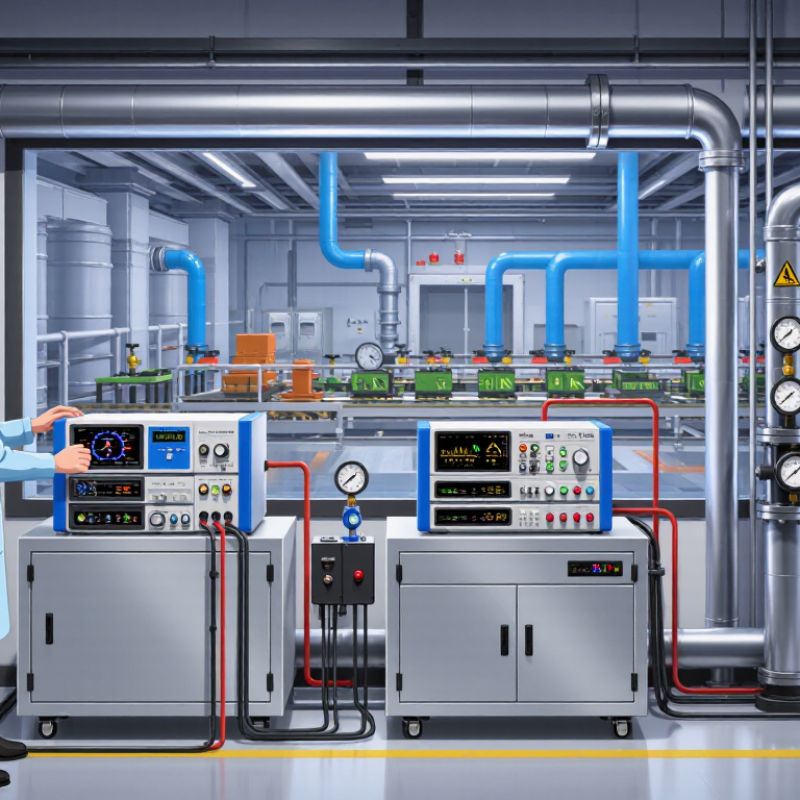
A trace oxygen analyzer measures extremely small oxygen concentrations in gases, often at parts-per-million levels. It helps verify purity, prevent oxidation, and protect sensitive production processes. In practice, technicians may use it for nitrogen, argon, hydrogen, or sealed packaging atmospheres. A stable reading can reveal a leaking valve, wet sample line, or poor gas supply.
Most analyzers use electrochemical, zirconia, or optical sensing technology. Each method has different strengths. Electrochemical sensors can be practical for routine monitoring, while zirconia systems often suit higher-temperature applications. Optical sensors may offer low maintenance, but their performance still depends on correct installation. The sample must reach the sensor cleanly and at a controlled flow rate. Even a small air leak can distort the result.
Calibration deserves serious attention. Certified reference gases, clean tubing, and regular leak checks improve confidence. I have seen operators blame the analyzer when the real problem was a contaminated filter. That assumption can fail. A reliable supplier should explain detection limits, response time, sensor life, calibration procedures, and service conditions clearly. The lowest purchase price may not represent the lowest operating cost. Humidity, pressure, temperature, and sampling distance also matter. The instrument is only as trustworthy as the entire measurement system.
How Trace Oxygen Analyzers Work
China Best Trace Oxygen Analyzer Supplier?
Trace oxygen analyzers measure extremely small oxygen levels in gases, often from parts per million to parts per billion. Their operation depends on the sensing method. An electrochemical sensor creates a current when oxygen reaches its electrolyte. The current changes with oxygen concentration. Zirconia sensors use high temperature and oxygen-ion movement to produce a measurable voltage. Optical systems examine how oxygen affects light absorption. Each method has limits. Moisture, pressure changes, leaks, and reactive gases can distort readings.
In practical gas monitoring, sample handling matters as much as the sensor. A narrow tube, clean filter, and stable flow help prevent delayed responses. The analyzer draws a sample through a controlled path, removes unwanted moisture when necessary, and compares the signal with a calibration reference. Calibration gas should match the expected measuring range. A poor connection can create a false low reading. That mistake is easy to overlook.
Tips: Check tubing for leaks before testing. Allow the reading to stabilize. Keep a record of calibration dates and gas conditions. Do not assume a new sensor is perfectly accurate. Sensors age, and field conditions can expose weaknesses that laboratory tests miss. When readings look unusual, repeat the test with an independent method before adjusting the process.
China Best Trace Oxygen Analyzer Supplier? - How Trace Oxygen Analyzers Work
| Analyzer Technology | Measurement Principle | Typical Oxygen Range | Typical Detection Capability | Main Advantages | Important Limitations |
| Electrochemical | Oxygen diffuses through a membrane and is reduced at an electrode, generating a current proportional to the oxygen concentration. | 0–1,000 ppm to 0–25% O2, depending on sensor design | Commonly from approximately 0.1–10 ppm at the low end | Compact, relatively low power consumption, simple operation, and suitable for many inert-gas applications. | Sensor life is limited; temperature, pressure, humidity, and reactive gases can affect the reading. |
| High-Temperature Zirconia | A heated zirconium-oxide electrolyte conducts oxygen ions. The voltage difference between reference and sample gases follows the Nernst relationship. | Typically ppm-level oxygen to percent-level oxygen | Often suitable for low-ppm measurement when properly configured and operated | Fast response, no liquid electrolyte, and a wide operating range. | Requires heating; combustible gases may be unsafe or cause measurement errors because the sensor operates at high temperature. |
| Laser Absorption | A laser passes through the sample, and oxygen concentration is calculated from the absorption of a selected wavelength. | From low ppm levels to percent oxygen, depending on optical path length and configuration | Can reach sub-ppm capability in controlled applications | No consumable electrochemical cell, rapid response, and low cross-sensitivity when the optical conditions are controlled. | Higher purchase cost; optical windows, dust, pressure, temperature, and water vapor may influence performance. |
| Paramagnetic | Oxygen is attracted into a magnetic field, producing a force or pressure difference measured by the analyzer. | Usually about 0–1% to 0–100% O2 | Generally designed for percent-level oxygen rather than ultra-trace measurement | Non-depleting measurement, good long-term stability, and useful for oxygen-enriched or process-gas monitoring. | Not normally the first choice for single-digit ppm oxygen; flow, pressure, vibration, and dust control are important. |
Key Selection and Performance Parameters
| Parameter | Typical Reference or Practical Requirement | Why It Matters |
| Measurement units | ppm, % volume, or ppb for highly sensitive applications | The selected unit should match the process specification and required alarm limits. |
| Accuracy | Commonly specified as a percentage of reading, full scale, or a fixed ppm value | Accuracy definitions are not interchangeable; the specification should state the complete error formula. |
| Response time | Often several seconds to a few minutes, including sample-line transport | Long tubing, filters, regulators, and low flow can make the complete system slower than the sensor itself. |
| Sample flow | Frequently controlled within approximately 0.1–1.0 L/min, according to analyzer design | Stable flow improves repeatability and prevents pressure-related errors. |
| Sample conditioning | Leak-free tubing, particulate filtration, pressure regulation, and moisture control when required | Leaks can introduce atmospheric oxygen, while condensation and particles can damage or contaminate the sensor. |
| Calibration gases | Zero gas, such as high-purity nitrogen, plus a certified oxygen span gas near the operating range | Using traceable gases helps verify accuracy and identify sensor drift. |
| Typical applications | Inert-gas purity, glove boxes, semiconductor processes, pharmaceutical packaging, metal heat treatment, and battery manufacturing | Application chemistry, oxygen level, pressure, temperature, and required response time determine the suitable technology. |
Note: Performance ranges are typical industry values and vary with sensor construction, sample conditions, calibration method, and analyzer configuration.
Key Features of a Reliable Oxygen Analyzer Supplier
China Best Trace Oxygen Analyzer Supplier?
A reliable oxygen analyzer supplier must prove performance, not merely promise it. The International Energy Agency’s Global Hydrogen Review 2024 reports about 97 million tonnes of hydrogen production in 2023. Low-emissions hydrogen remained below 1%. This expanding industry requires stable trace oxygen measurement during production, storage, and purification. Look for analyzers offering ppb-level sensitivity, repeatable calibration, fast response, and clear detection limits. IEC 61207-1 also emphasizes performance verification for gas analyzers, making documented testing essential.
Supplier experience matters in real operating conditions. A strong supplier should provide sample-line design, moisture control, leak testing, and sensor replacement guidance. ISO/IEC 17025:2017 supports confidence in calibration laboratory competence. Ask for traceable calibration certificates, uncertainty data, factory test records, and maintenance instructions. Remote diagnostics and local technical support can reduce downtime, especially when readings drift during temperature changes. We have seen specifications look impressive, yet poor sample conditioning caused unstable results. Numbers alone are not enough.
Tips: Request a live demonstration with your actual gas matrix. Compare response time at low oxygen levels, not only at room air. Check whether the supplier explains cross-sensitivity, calibration frequency, and sensor life honestly. A thoughtful supplier should admit limitations. No instrument is perfect. Also review after-sales response times, spare-part availability, and training quality before choosing a long-term partner.
How to Evaluate China-Based Suppliers
China Best Trace Oxygen Analyzer Supplier?
How to Evaluate China-Based Suppliers
Choosing a trace oxygen analyzer supplier requires more than comparing online prices. Check the supplier’s technical experience with your gas, pressure, humidity, and measurement range. A reliable supplier should explain whether the analyzer measures ppm or ppb levels, and how temperature affects accuracy.
Ask for calibration certificates, sample test reports, and clear measurement specifications. The certificate should show standards, dates, instruments, and traceable records. Request a live demonstration using a similar gas composition. Ask for the response time, sensor life, alarm settings, output signals, and data storage options. Numbers can mislead. Evidence matters more.
Evaluate the factory’s quality controls and communication habits. Confirm serial-number tracking, inspection procedures, packaging details, warranty terms, and spare sensor availability. A video factory tour can reveal testing equipment and assembly conditions, although it cannot replace an independent inspection. I would also test a sample unit before placing a larger order. This adds time, but it may expose unstable readings or unclear software. Some suppliers respond quickly before payment, then become slower during commissioning. That risk deserves direct questions about technical support, replacement parts, and remote troubleshooting. A professional supplier will provide practical answers, not only attractive specifications.
Applications and Selection Criteria for Trace Oxygen Analyzers
China Best Trace Oxygen Analyzer Supplier?
Applications and Selection Criteria for Trace Oxygen Analyzers
Trace oxygen analyzers support quality control where oxygen levels must remain extremely low. They are used in glove boxes, semiconductor production, heat treatment, gas generation, and pharmaceutical packaging. In a glove box, a reading of a few parts per million can reveal a small leak before moisture damages sensitive materials. Industrial gas systems also use these instruments to verify purity during filling and distribution.
Selection should begin with the measurement range and required accuracy. An analyzer designed for percent-level oxygen may perform poorly at parts-per-billion levels. Sensor technology also matters. Electrochemical sensors can suit portable checks, while zirconia or laser systems may serve continuous process monitoring. Consider response time, sample flow, pressure, temperature, and moisture control. A stable sample system is essential. Many inaccurate readings come from tubing leaks, not the analyzer itself.
A reliable supplier should provide calibration records, clear technical specifications, application guidance, and accessible service support. Ask how often the sensor requires replacement and whether reference gases are available locally. During factory evaluations, compare readings against a certified reference gas under actual operating conditions. A perfect display is not always a trustworthy result. Even experienced teams can overlook dead volume in sampling lines or delayed response after maintenance. Choose equipment that records trends, alarms clearly, and remains practical for daily operators.
