What Are the 2026 Top PCB Control Board Types?
In 2026, Pcb Control Boards are becoming more specialized, compact, and application-driven. A Pcb Control Board now supports automation, electric vehicles, medical equipment, robotics, energy systems, and connected appliances. Each application demands different electrical, mechanical, and thermal performance.
This article introduces the leading PCB control board types expected to shape modern product design. Multilayer rigid boards remain practical for stable industrial equipment. Flexible and rigid-flex boards help engineers manage tight spaces and repeated movement. HDI boards support dense layouts and smaller electronic assemblies. Metal-core boards improve heat transfer near power devices. High-frequency boards serve communication, radar, and fast signal applications.
Performance matters.
The right choice depends on current load, operating temperature, vibration, signal speed, production volume, and service expectations. Engineers should also review IPC guidance, UL requirements, material datasheets, and supplier process controls. A board that works well in a laboratory may fail after months of heat cycling or mechanical stress. That detail is easy to overlook.
A simple ranking can mislead. There is no universal “best” control board type. For example, a compact robot arm may need rigid-flex construction, while a motor controller may require heavy copper and strong thermal management. Designers must balance cost, reliability, manufacturability, and future maintenance. This overview compares the major types, their practical strengths, and their limitations. Some conclusions may change as materials, assembly methods, and system architectures develop. That uncertainty deserves attention.
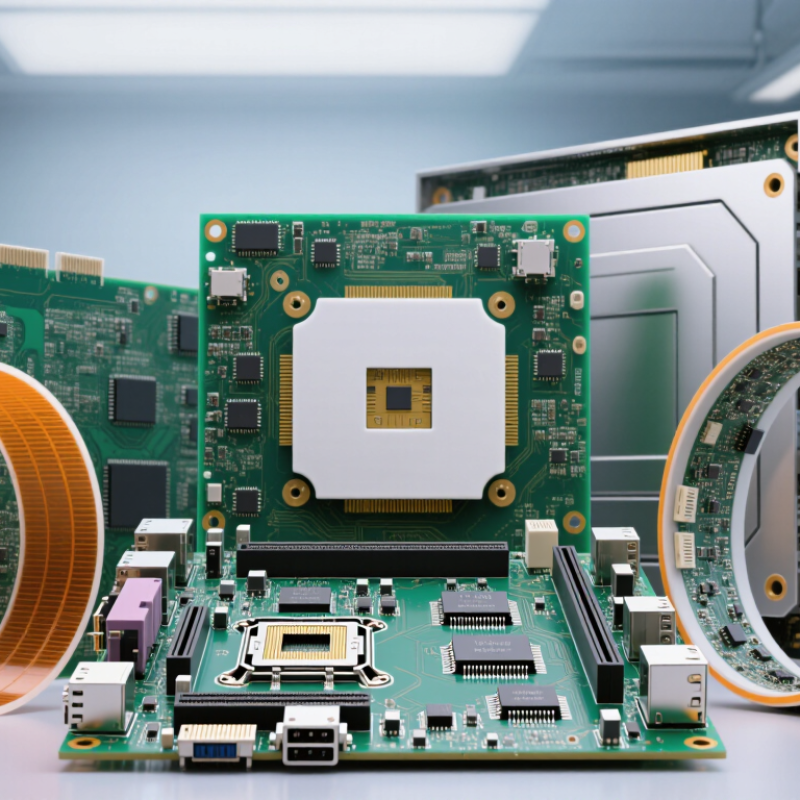
PCB Control Boards: Purpose, Structure, and Core Functions
What Are the 2026 Top PCB Control Board Types?
PCB control boards direct power, signals, timing, and safety decisions inside modern equipment. Their purpose is simple: receive input, process instructions, and control an output. Common 2026 designs include embedded controller boards, power control boards, motion control boards, and industrial input-output boards. Multilayer boards support dense routing and stable signal paths. Rigid-flex boards fit compact equipment with moving sections. Each type serves a different operating environment.
The structure usually includes a fiberglass or flexible substrate, copper traces, solder pads, integrated circuits, sensors, connectors, and protection parts. A processor handles logic, while memory stores firmware and operating parameters. Power sections regulate voltage before sensitive circuits receive energy. Communication interfaces connect the board with sensors, displays, or other controllers. During practical inspection, heat marks, loose connectors, and cracked solder joints often reveal early faults. Small details matter. Still, design teams sometimes prioritize density over repair access. That choice can create avoidable maintenance problems.
Tips: Define voltage, current, temperature, and communication needs before selecting a board type. Leave clear spacing around hot components. Use labeled connectors and test points for safer diagnosis. Confirm grounding and protection requirements during prototype testing. Do not assume a thicker board always performs better. A simpler layout may improve reliability, even when it looks less advanced.
What Are the 2026 Top PCB Control Board Types?
PCB control boards are commonly classified by their primary control role. The chart compares typical functional coverage across embedded controller, motor control, industrial I/O, power management, and safety control boards. Scores are normalized from 1 to 5 for comparison and do not represent market share.
Embedded controller boards emphasize processing and sensor integration. Motor-control boards add power switching and feedback loops, while industrial I/O boards prioritize field connectivity. Power-management boards focus on voltage and current conversion, and safety-control boards add monitoring, redundancy, and fault-response functions.
Single-Layer, Double-Layer, and Multilayer Control Boards
In 2026, PCB control boards remain central to automation, appliances, vehicles, and energy equipment. The practical choice is rarely about layer count alone. It depends on signal density, current demand, operating temperature, and production volume. A single-layer control board uses copper on one side of the substrate. It is economical, easy to inspect, and suitable for simple relay circuits, indicators, and low-density controls. Repairs are usually straightforward. However, long wiring paths can increase noise and reduce layout flexibility.
Double-layer boards place conductive tracks on both sides, with plated holes connecting them. This structure supports more components, shorter signal routes, and better grounding. It fits motor controllers, sensor modules, and compact industrial panels. In field testing, careful separation between power and signal traces often matters more than adding complexity. A poorly routed double-layer board can still create heat and interference.
Multilayer control boards stack several copper layers with insulating material between them. They offer compact routing, controlled impedance, and dedicated power or ground planes. These advantages suit high-speed processors, communication equipment, and dense safety monitoring systems. Manufacturing and inspection become more demanding, though. More layers do not automatically mean higher reliability. Engineers must verify dielectric thickness, thermal paths, via quality, and repair access. I sometimes see designs choose multilayer construction too early. That decision deserves another review.
Rigid, Flexible, and Rigid-Flex PCB Control Boards
What Are the 2026 Top PCB Control Board Types?
Rigid, Flexible, and Rigid-Flex PCB Control Boards
In 2026, PCB control boards are shaped by three practical structures: rigid, flexible, and rigid-flex. Rigid boards remain common in industrial controllers, appliances, and automation cabinets. Their solid laminate supports stable mounting, larger components, and efficient assembly. Stable and economical. However, fixed geometry can limit compact product designs. Poor connector placement may also increase wiring stress and maintenance time.
Flexible PCB control boards use thin polymer layers that bend around hinges, displays, sensors, or narrow enclosures. They reduce cable bundles and save valuable space. This advantage matters in wearable equipment and moving mechanisms. Yet, repeated bending requires a controlled bend radius and proper strain relief. A sharp fold can damage copper traces over time. Small details matter.
Rigid-flex boards combine firm component zones with bendable interconnects. This structure can reduce connectors, improve signal paths, and simplify internal routing. It suits medical instruments, robotics, and compact control modules. In practical design reviews, I check layer transitions, thermal paths, assembly tolerances, and vibration exposure. Testing should include bending cycles, temperature changes, insulation checks, and functional operation. I still see teams choosing flexible boards only for appearance. That decision can create avoidable cost and early failure. Material selection, controlled impedance, and documented inspection results make the final choice more dependable.
What Are the 2026 Top PCB Control Board Types? - Rigid, Flexible, and Rigid-Flex PCB Control Boards
| PCB Control Board Type | Basic Construction | Typical Layer Range | Bendability | Common Materials | Typical Control-Board Applications | Main Advantages | Main Limitations |
| Rigid PCB Control Board | A fixed, multilayer circuit board with a solid dielectric core and copper conductor layers. | Usually 1–16 layers for general control electronics; higher counts are possible for complex designs. | Not intended to bend during installation or operation. | FR-4 glass-reinforced epoxy, copper, solder mask, and protective surface finishes such as ENIG or HASL. | Industrial controllers, motor-control units, power-management boards, automation equipment, instrumentation, and embedded control systems. | Lowest cost for many standard designs, strong mechanical support, broad manufacturing availability, and good component compatibility. | Requires connectors or cable assemblies when components are located on separate or moving sections; occupies more fixed space than a flexible design. |
| Flexible PCB Control Board | A thin circuit made with flexible dielectric films and rolled or electrodeposited copper conductors. | Commonly 1–6 conductive layers, depending on routing, shielding, and current requirements. | Can be folded or bent for installation; the permitted bend radius depends on thickness, copper type, layer count, and whether the bend is static or dynamic. | Polyimide film, rolled-annealed copper for repeated flexing, adhesive or adhesiveless dielectric systems, and flexible coverlay. | Compact sensors, displays, handheld equipment, medical instruments, battery assemblies, moving mechanisms, and space-constrained control modules. | Reduces wiring and connector count, saves space and weight, supports three-dimensional packaging, and tolerates vibration better than many cable assemblies. | Usually costs more than a simple rigid board, needs careful bend-radius control, and may require additional stiffeners for component mounting or connector areas. |
| Rigid-Flex PCB Control Board | A single integrated board combining rigid sections for components with flexible sections for interconnection and folding. | Often 4–16 total layers, with the rigid and flexible regions having different layer structures. | Rigid areas remain fixed while designated flex zones bend during assembly or controlled operation. | FR-4 rigid laminates, polyimide flex layers, copper, coverlay, bonding films, stiffeners, and plated through-hole or microvia structures. | High-density industrial controls, aerospace and transportation electronics, robotics, compact instrumentation, ruggedized equipment, and systems with limited internal space. | Combines mechanical strength and component density with integrated bendable interconnects; reduces separate connectors, cables, assembly steps, and potential connection failures. | Higher design and fabrication complexity, stricter stack-up requirements, more demanding inspection, and generally higher initial tooling and production cost. |
Design note: Actual layer count, dielectric thickness, copper weight, impedance, bend radius, operating temperature, and current capacity must be selected according to the circuit requirements, mechanical constraints, applicable IPC criteria, and the fabricator’s qualified process capability.
High-Density, Embedded, and Smart PCB Control Boards
What Are the 2026 Top PCB Control Board Types?
High-Density, Embedded, and Smart PCB Control Boards
In 2026, high-density PCB control boards support smaller equipment with more functions. Their narrow trace spacing and microvias save valuable board area. Designers must control impedance, heat paths, and signal interference from the earliest layout stage. A crowded board can look efficient, yet become difficult to repair. That trade-off deserves honest attention.
Embedded PCB control boards place passive components, sensors, or conductive structures inside the board layers. This approach shortens signal paths and protects sensitive parts from vibration. It also reduces external assembly space. However, inspection becomes harder after lamination. Engineers need reliable material records, controlled manufacturing data, and cross-section analysis during qualification. One hidden defect can affect an entire production batch.
Smart PCB control boards combine processing circuits with sensing and communication functions. They can monitor temperature, current, vibration, and operating time in real conditions. For example, a thermal sensor near a power device can warn the controller before overheating occurs. Secure firmware handling and clear diagnostic records improve long-term reliability. Still, “smart” does not mean infallible. Sensor drift, poor calibration, and software assumptions can create false confidence. Practical testing should include thermal cycling, electrical load changes, vibration, and repeated startup conditions. Field feedback may reveal weaknesses that laboratory testing misses.
