
PACKINT - Chocolate Machines

2026 Best CNC Milling Machine Manufacturers Worldwide

Choosing among the 2026 Best CNC Milling Machine Manufacturers Worldwide requires more than comparing prices or brochure specifications. Buyers should examine spindle stability, positioning accuracy, thermal control, software integration, and after-sales support. A machine may promise 0.005 mm accuracy, yet real production results depend on tooling, operators, maintenance, and material behavior.

Professor Yusuf Altintas, a leading authority in machining science, writes, “Machining is a complex process involving many variables.” That observation remains highly relevant. A premium CNC Milling system must perform consistently beside a humming coolant tank, under changing loads, and across long production shifts. Manufacturers with strong engineering teams usually provide better process support, training, diagnostics, and retrofit options.

This guide evaluates global manufacturers through practical evidence. We consider machine construction, control systems, automation readiness, energy use, certification, customer experience, and application range. Aerospace components need different capabilities from medical parts or aluminum prototypes. Context matters.

Some rankings remain debatable.

Public data is not always comparable. Manufacturers may report accuracy under ideal conditions, while users face heat, vibration, and operator variation. Therefore, this overview should support careful due diligence, not replace factory trials or technical audits. Prospective buyers should request sample cuts, inspect test reports, and speak with current users.

The strongest CNC Milling manufacturers are not always the largest names. Sometimes, a specialized regional builder delivers faster service and more practical customization. That possibility deserves attention. This introduction sets the foundation for comparing leading companies and identifying machines that can deliver dependable value in real manufacturing environments.
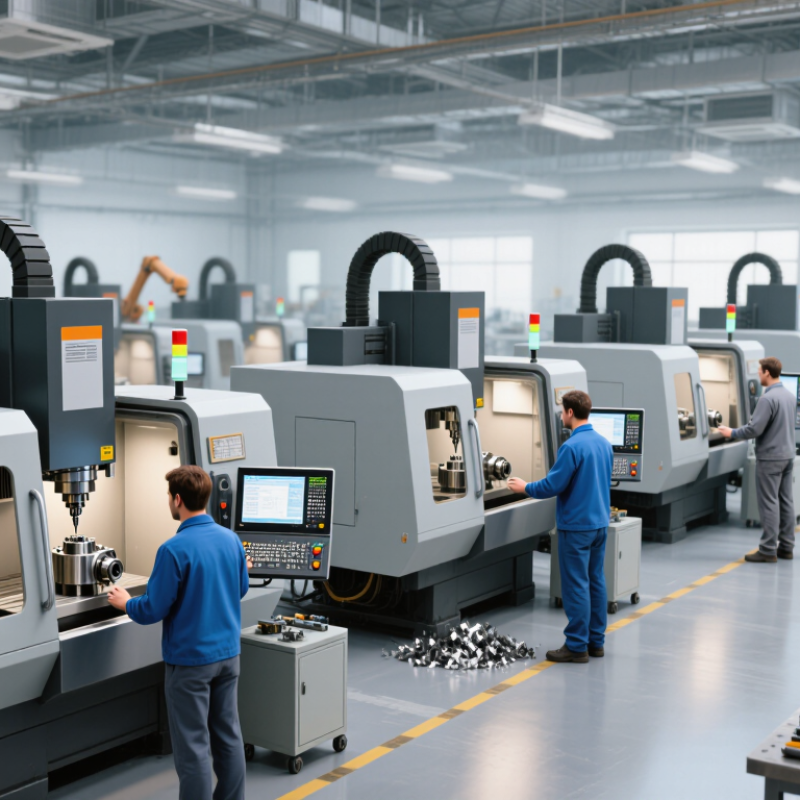
2026 Best CNC Milling Machine Manufacturers Worldwide

CNC Milling Fundamentals: 3-, 4-, and 5-Axis Configurations Explained

2026 Best CNC Milling Machine Manufacturers Worldwide

CNC milling begins with axis control. A three-axis machine moves the cutter along X, Y, and Z. It suits plates, pockets, slots, and many prismatic parts. However, deep cavities may require multiple setups. That can increase alignment errors and handling time. Axis count changes everything.

A four-axis configuration adds rotary motion, usually around the X-axis. It can machine several faces without removing the workpiece. This improves consistency for shafts, housings, and indexed features. A five-axis machine adds another rotary axis. With simultaneous movement, the cutter can maintain a better angle against curved surfaces. This reduces tool interference and may improve surface quality. It also demands stronger programming, workholding, and inspection practices. More axes do not automatically mean better production.

MarketsandMarkets’ 2024 CNC machine report projects market growth from approximately USD 83 billion in 2024 to above USD 112 billion by 2029. That forecast reflects wider automation adoption, not guaranteed savings for every shop. Real performance still depends on spindle rigidity, control software, thermal stability, and operator experience. I have seen complex machines underperform when fixture design was treated as an afterthought. That mistake is expensive.

Tips: Start with the part, not the machine. Count required setups, undercuts, tolerances, and surface-access angles. Choose four-axis equipment when indexed access solves the problem. Consider five-axis machining when continuous tool orientation genuinely reduces setups. Measure twice. Review cycle-time estimates with real cutting data, not brochure values.

CNC Milling Fundamentals: 3-, 4-, and 5-Axis Configurations Explained

CNC milling machines are commonly classified by the number of controlled axes. A standard 3-axis configuration uses three linear axes, while 4-axis and 5-axis configurations add one or two rotary axes for access to more surfaces and complex geometries.

The values represent the typical controlled-axis structure: three linear axes are used for X, Y, and Z movement, with additional rotary axes introduced in 4-axis and 5-axis configurations.

Global Manufacturer Evaluation Using ISO 230-2 Accuracy and Repeatability Data

2026 Best CNC Milling Machine Manufacturers Worldwide

Global Manufacturer Evaluation Using ISO 230-2 Accuracy and Repeatability Data

A credible 2026 evaluation should begin with measured evidence, not catalogue promises. ISO 230-2:2014 defines methods for testing positioning accuracy and repeatability on machine-tool axes. It examines systematic deviation, bidirectional positioning, and statistical variation. These results show how closely an axis reaches programmed coordinates. They do not prove cutting quality alone.

The 2024 World Machine Tool Survey estimated global machine-tool consumption at roughly US$85 billion in 2023. That scale increases buyer choice, but it also complicates comparisons. Manufacturers may publish different test lengths, temperatures, loads, and correction settings. A smaller repeatability figure may therefore reflect easier test conditions. A clean number can still mislead. Evaluation teams should request complete ISO 230-2 reports, including uncertainty, test temperature, axis travel, and compensation status. Thermal drift matters. So does machine installation.

Tips: Compare identical axes and test conditions. Ask for raw measurement charts, not only a specification table. Check whether accuracy is reported as ± value or total range. Review calibration dates and environmental controls. Then conduct an independent acceptance test after installation. ISO 230-2 data is powerful, but it remains one part of the decision. Toolholding, spindle growth, foundation stiffness, and operator practice can change real machining results. I would also question unusually perfect figures. Manufacturing is rarely that clean.

Comparing Spindle Speeds from 8,000 to 60,000 RPM Across Machine Classes

Choosing among the 2026 best CNC milling machine manufacturers worldwide requires more than reading maximum RPM figures. Spindle speed must match the machine class, tooling system, and cutting material. General-purpose vertical mills commonly operate between 8,000 and 12,000 RPM. They provide useful torque for steel, cast iron, and moderate aluminum work. Production machines often reach 12,000 to 20,000 RPM, supporting faster cycles without sacrificing too much cutting force.

High-speed machining centers may run from 24,000 to 40,000 RPM. These machines suit aluminum, graphite, plastics, and small-diameter cutters. Micro-machining platforms can reach 60,000 RPM, but their practical value depends on balance, runout, cooling, and tool quality. At 60,000 RPM, a tiny imbalance can create visible surface marks and shorten bearing life. Fast is not automatically better.

Check torque curves, not only advertised speed. A spindle may reach 30,000 RPM yet lose cutting authority at lower speeds. Operators should inspect vibration, chip evacuation, thermal growth, and tool-holder condition during realistic tests. Thin aluminum walls need stable high speed. Heavy steel cuts need controlled torque. I would also question laboratory-only figures; real production often runs slower. That detail is easy to overlook. Reliable comparisons should record surface finish, cycle time, temperature, and repeatability across several tools, not one impressive demonstration.

Top CNC Milling Machine Manufacturers by Region, Industry, and Machine Type

In 2026, comparing CNC milling machine manufacturers requires more than checking spindle speed. Regional strengths often reflect supply chains, training systems, and service coverage. European manufacturers often emphasize precision validation, energy management, and five-axis integration. North American suppliers frequently focus on flexible automation, retrofit support, and high-mix production. East Asian manufacturers often provide broad machine ranges, efficient component access, and competitive value. Emerging regional producers may offer useful customization, but their documentation and overseas support require careful verification.

Industry requirements should guide the shortlist. Aerospace production needs stable thermal control, traceable inspection records, and reliable five-axis movement. Automotive plants usually prioritize cycle time, repeatability, pallet systems, and unattended operation. Medical machining demands clean processes, tight tolerances, and disciplined quality records. Mold manufacturers may value high-speed spindles, strong software compatibility, and excellent surface finish. Job shops often need compact three-axis or vertical machines that handle changing materials without excessive setup time.

Machine type changes the buying decision. Vertical mills suit general components and limited floor space. Horizontal mills improve chip evacuation during heavier production. Five-axis machines reduce repositioning, but they also increase programming demands and maintenance complexity. A practical evaluation should include test cuts, noise levels, tool-change time, service response, and operator training. No ranking is flawless. A polished demonstration can hide weak after-sales support, while a less impressive trial may reveal dependable engineering. Experienced buyers should inspect actual parts, not only brochures.

2026 Best CNC Milling Machine Manufacturers Worldwide - Top CNC Milling Machine Manufacturers by Region, Industry, and Machine Type

Regional and application-based comparison using typical technical specifications for industrial CNC milling equipment.

Region Primary Manufacturing Strength Main Industry Applications Common Machine Type Typical Axes Typical Working Travel Typical Spindle Range Typical Positioning Accuracy Recommended Selection Priority
North America High-value production, aerospace machining, energy equipment, and job-shop flexibility Aerospace, defense, medical devices, oil and gas, industrial machinery 3-axis and 5-axis vertical machining centers 3+2 or simultaneous 5-axis X 500–1,500 mm; Y 400–800 mm; Z 400–800 mm 8,000–20,000 rpm; 15–50 kW Approximately ±0.005–0.010 mm Rigid construction, thermal control, probing, and service availability
Europe Precision engineering, automation integration, heavy machining, and complex multi-axis work Automotive, aerospace, energy, mold and die, precision components 5-axis machining centers and high-precision horizontal machining centers 4+1, 3+2, or simultaneous 5-axis X 600–2,000 mm; Y 500–1,000 mm; Z 500–1,200 mm 6,000–18,000 rpm; 20–60 kW Approximately ±0.003–0.008 mm Geometric accuracy, automation compatibility, coolant management, and lifecycle cost
East Asia Large-scale production, broad model coverage, electronics, automotive, and precision tooling Automotive, electronics, consumer products, semiconductor equipment, molds High-speed vertical machining centers and compact 5-axis machines 3-axis, 4-axis, or 5-axis X 400–1,200 mm; Y 300–700 mm; Z 300–700 mm 10,000–30,000 rpm; 7.5–40 kW Approximately ±0.004–0.010 mm Throughput, repeatability, tool-change time, and total installed cost
South Asia General engineering, automotive suppliers, education, and cost-sensitive production Automotive components, pumps, agricultural machinery, fabrication, job shops Standard 3-axis vertical machining centers 3-axis, with optional 4th-axis integration X 500–1,000 mm; Y 350–600 mm; Z 350–600 mm 6,000–12,000 rpm; 7.5–25 kW Approximately ±0.008–0.015 mm Purchase price, operator training, maintainability, and local spare parts
Southeast Asia Export-oriented production, electronics, automotive assembly, and contract machining Automotive, electronics, electrical equipment, precision fixtures, general manufacturing Compact vertical machining centers and production cells 3-axis or 4-axis X 400–1,000 mm; Y 300–600 mm; Z 300–600 mm 8,000–15,000 rpm; 11–30 kW Approximately ±0.006–0.012 mm Cycle time, energy efficiency, automation readiness, and regional support
Middle East & Africa Energy equipment, infrastructure, repair machining, and heavy industrial components Oil and gas, mining, power generation, construction equipment, maintenance services Heavy-duty vertical and double-column machining centers 3-axis, 4-axis, or 5-axis depending on component complexity X 800–3,000 mm; Y 600–1,500 mm; Z 600–1,500 mm 4,000–12,000 rpm; 25–100 kW Approximately ±0.010–0.025 mm Load capacity, environmental protection, remote diagnostics, and service response

CNC Milling Machine Type Comparison

Machine Type Best-Suited Industries Typical Materials Typical Production Volume Main Advantages Key Evaluation Metric
3-Axis Vertical Machining Center General engineering, education, tooling, job shops Aluminum, steel, stainless steel, plastics Low to medium volume Lower investment, broad usability, simple programming Rigidity, repeatability, work envelope, and service cost
4-Axis Machining Center Rotational parts, fixtures, manifolds, and production components Aluminum, steel, cast iron, copper alloys Medium to high volume Fewer setups and improved access to multiple faces Rotary-axis accuracy, indexing time, and fixture compatibility
5-Axis Machining Center Aerospace, medical, turbine components, complex molds Titanium, nickel alloys, stainless steel, aluminum Low to high volume, depending on automation Complex geometry, fewer setups, improved surface continuity Volumetric accuracy, thermal stability, CAM integration, and collision control
Horizontal Machining Center Automotive, heavy equipment, hydraulic components, production machining Cast iron, steel, aluminum, ductile iron Medium to high volume Pallet automation, chip evacuation, and multi-face machining Pallet-change time, spindle torque, chip control, and uptime
High-Speed Milling Machine Mold making, electronics, small precision parts, graphite machining Aluminum, copper, graphite, hardened steel, engineering plastics Prototype to medium volume Fine surface finish, fast feed rates, and small-tool performance Spindle balance, acceleration, thermal drift, and surface finish
Double-Column Machining Center Energy, shipbuilding, mining, construction, and large molds Large steel parts, cast iron, aluminum structures, welded fabrications Low to medium volume Large work envelope, high load capacity, and deep cutting capability Column stability, table load, long-term alignment, and spindle torque
Data note: The specifications shown are representative industrial ranges rather than claims for any individual manufacturer or brand. Actual values vary by model, configuration, workholding system, material, tooling, environmental conditions, and measurement method. Accuracy terminology is commonly evaluated with procedures referenced in ISO 230-2 and machine-tool geometry requirements such as ISO 10791.

2026 Buying Criteria: Tolerance, Work Envelope, Automation, and 5-Axis ROI

2026 Best CNC Milling Machine Manufacturers Worldwide

2026 Buying Criteria: Tolerance, Work Envelope, Automation, and 5-Axis ROI

Selecting a CNC milling machine starts with the part, not the brochure. In production, tolerance claims must match real materials, tools, temperatures, and operator routines. Request inspection reports from comparable jobs. A 0.01 mm specification means little without measurement conditions. Ask for repeatability results across several shifts. That detail often exposes hidden limitations.

The work envelope should fit your largest part with room for clamping and tool movement. Measure fixtures, rotary tables, chip clearance, and door access. A machine that barely fits the component may create expensive setup problems. I once underestimated fixture height. The machine worked, but loading became awkward and slow. That mistake changed how I review layouts.

Automation deserves practical testing. Check pallet changes, probing, tool monitoring, and recovery after an interrupted cycle. A reliable system should reduce handling, not add programming burdens. For five-axis equipment, calculate savings from fewer setups, shorter cutting paths, and improved access. Compare those gains with software costs, training, maintenance, and inspection requirements. Run a sample part before approving the purchase. Five-axis capability can look impressive. It may still deliver weak returns when parts are simple, volumes are low, or programming support is limited. Ask for cycle-time evidence, service response terms, and operator training details. Supplier transparency matters as much as machine specifications.